
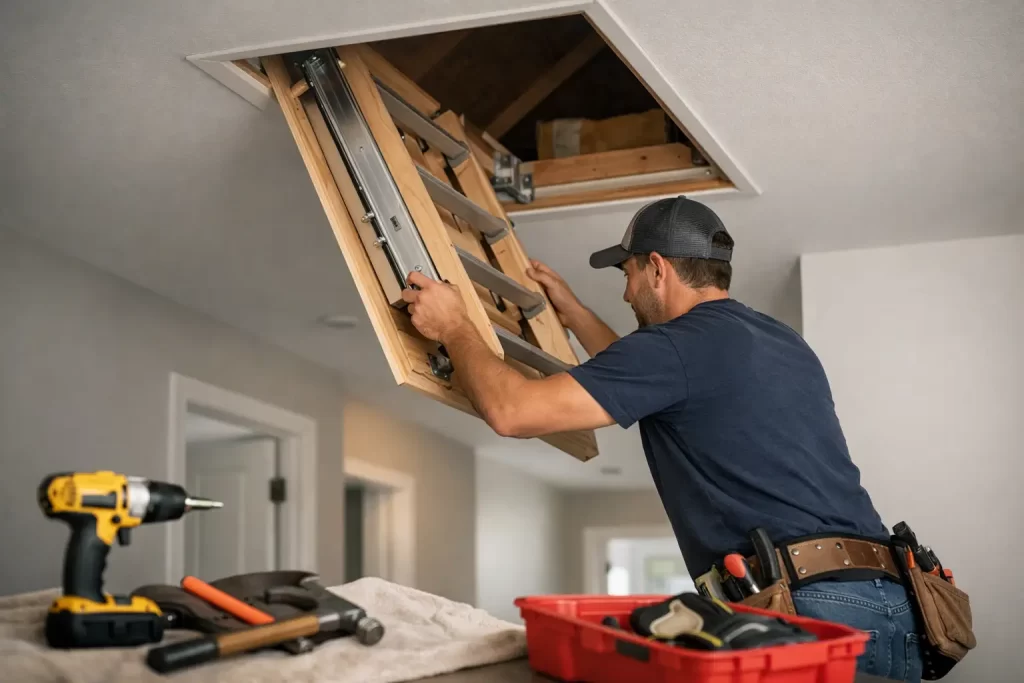
If you are pricing an attic access upgrade, attic ladder installation labor cost is usually the first number you want to understand. That makes sense. Homeowners rarely worry about the ladder alone – they want to know the full fitting cost, how long the job will take, and whether there is likely to be extra work once the installer opens the ceiling.
The short answer is that labor cost depends on the type of ladder, whether there is an existing opening, how much carpentry is needed, and whether the installer is fitting only a ladder or completing a more complete attic access package. A straightforward replacement job is usually at the lower end. A first-time installation with cutting, framing, trimming, and hatch adjustments will cost more.
What affects attic ladder installation labor cost?
The biggest factor is whether the opening already exists and is the right size. If an old attic ladder is being removed and replaced with a similar model, labor is often more predictable. The installer can work with the existing opening, make minor adjustments, secure the new unit, and test it for safe operation.
If there is no existing attic ladder, labor increases because the work is no longer just an installation. It becomes a carpentry job. The ceiling opening may need to be cut, joists assessed, framing adjusted, and the hatch area finished neatly so it looks right from below and works properly from above.
Ladder type matters too. Aluminum folding ladders, telescoping ladders, and heavy-duty wood models do not all fit the same way. Some are quicker to install. Others need more careful alignment, more headroom planning, or stronger support because of their size and weight capacity.
Ceiling height also changes the labor involved. A standard-height ceiling with clear landing space is simpler than a tall ceiling over a narrow hallway. If the installer has to work around tight access, light fixtures, or awkward room layouts, the job can take longer.
Typical labor price ranges
For labor only, many homeowners can expect attic ladder installation labor cost to fall somewhere between a few hundred dollars for a simple replacement and significantly more for a first-time install that needs carpentry work. In many cases, basic labor for a straightforward replacement might land around $250 to $500. A more involved new installation can often range from $500 to $1,000 or more depending on complexity.
That is a broad range because labor pricing is tied to real job conditions, not just the ladder itself. Two homes can use the same product and still have very different labor charges. One may be a clean swap-out. The other may involve resizing the opening, correcting poor framing, or finishing around insulation and trim.
This is also why package pricing is often easier for homeowners. Instead of trying to separate product cost from labor cost and then guess at extras, a specialist can price the full job based on what your attic actually needs.
When labor costs go up
Extra labor charges usually come from hidden complexity, not from the installer trying to upsell the job. Once the ceiling is opened, a few common issues can increase time on site.
The first is structural adjustment. If the opening needs to be enlarged or reframed safely, that adds skilled carpentry time. The second is insulation work. If the existing hatch is poorly insulated or drafty, many homeowners choose to upgrade the attic door or improve the seal at the same time. The third is access difficulty. Tight spaces, old homes, and uneven framing all slow the work down.
Finishing details can also affect the price. Some customers only want a functional ladder fitted. Others want the area trimmed neatly, the hatch upgraded, and the installation left looking like it was always part of the home. That extra finish work is often worth it, but it does raise labor.
Labor only vs full installed cost
This is where many quotes become confusing. Labor only means you are paying just for fitting, usually because you already have the ladder or are buying it separately. Full installed cost includes the product, installation labor, fixings, finishing materials, and sometimes disposal of the old unit.
Labor-only pricing can look cheaper at first, but it is not always the best value. If the ladder you bought is the wrong size, not suitable for your ceiling height, or not ideal for regular use, you may end up paying more in adjustments or replacement. A specialist installer will usually recommend a ladder based on your opening size, available clearance, and how often you plan to use the attic.
For homeowners who want a safe, tidy result with no guessing, a fitted package is often the simpler option. It removes the back-and-forth between product supplier and installer and gives you a clearer idea of the final cost from the start.
Why specialist installers often save money
It can seem cheaper to hire a general handyman for attic ladder fitting, especially if the labor quote is low. Sometimes that works out fine for a basic swap. But attic access is one of those jobs where experience matters.
A specialist does this work every day. That means faster assessment, better product matching, cleaner cuts, and fewer surprises during installation. It also means they know the common problems before they start – things like awkward truss positions, insufficient landing space, weak old hatches, or ladders that technically fit but are not safe or practical for family use.
Paying a little more for experienced labor can reduce the chance of rework later. That matters if you want the attic to become useful storage space rather than just a hatch you use twice a year.
What should be included in the labor quote?
A good quote should tell you more than a single number. At minimum, you want to know whether the labor covers removal of an old ladder or hatch, installation of the new unit, adjustment to the opening if needed, testing, and cleanup.
If the quote is for a new attic ladder opening, ask whether trim work and finishing are included. If insulation or air sealing matters to you, ask that upfront as well. A low labor price can stop looking low very quickly if basic finishing and cleanup are treated as extras.
This is why homeowners tend to prefer clear service packages from specialist companies. You know what is being installed, what the finish standard is, and what the fitter is responsible for before the job begins.
Is attic ladder installation a DIY job?
Some homeowners consider doing the work themselves to save labor cost. That may be realistic if they are replacing an existing ladder with the same size unit and have strong carpentry experience. Even then, it is not a light job. Attic ladders are awkward to lift, alignment has to be exact, and safety matters every time the ladder is used.
For a first-time installation, DIY is much harder than it looks. Cutting the opening incorrectly, weakening framing, or fitting the ladder out of level can create a safety issue. If the attic is being used for storage by a busy household, a professionally fitted ladder is usually money well spent.
How to keep the cost sensible
The best way to keep attic ladder installation labor cost under control is to get the right quote from the start. Clear photos, ceiling height, rough opening size, and a note on whether there is an old ladder in place can help an installer price the job more accurately.
It also helps to decide what you actually want from the upgrade. If you only need basic access a few times a year, that is one type of job. If you want safe, frequent access to usable attic storage, it makes sense to look at the ladder, hatch insulation, and flooring together. Doing it all in one visit is often better value than booking separate jobs later.
A specialist company like AOS Attic Ladders & Flooring understands that most homeowners are not looking for technical detail. They want a fair price, a quick turnaround, a clean installation, and a result that feels solid every time they pull the ladder down.
The best quote is not always the cheapest one. It is the one that matches the work needed, includes the finish you expect, and leaves you with attic access that is safe, practical, and worth using.