
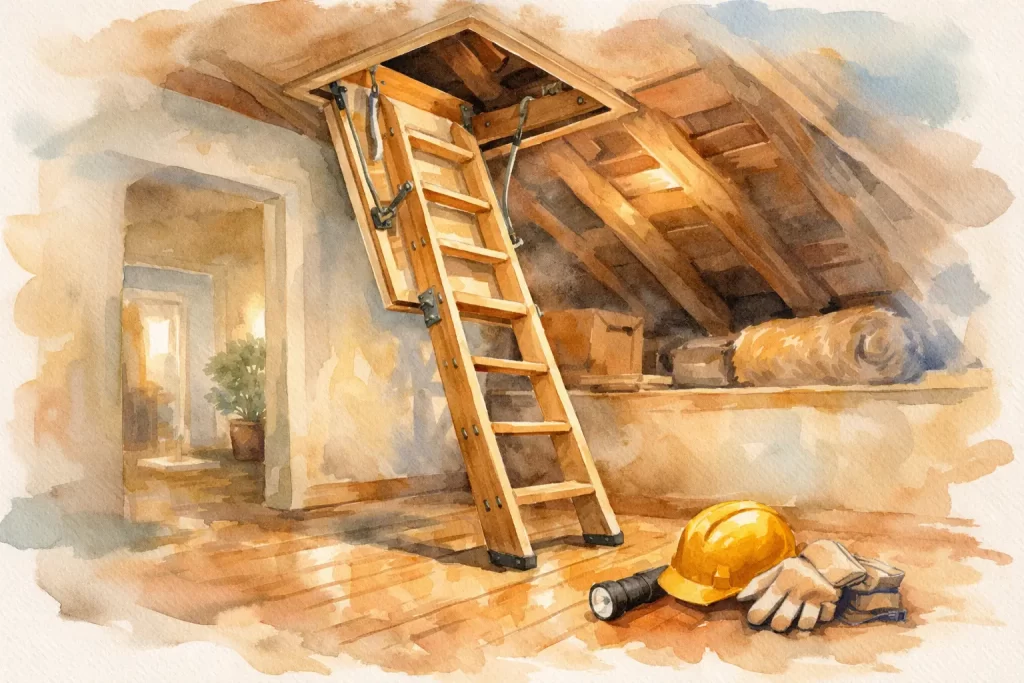
A wobbly attic ladder changes a simple storage job into something people put off for months. If you have to pull yourself through a tight opening, balance on a narrow step, or carry boxes while worrying about the ladder shifting, the question is fair: are attic ladders safe?
A properly selected and professionally fitted attic ladder can be a safe, practical way to access storage space. But safety depends on more than buying a ladder that fits the opening. The ladder type, weight rating, attachment points, attic opening, handrail, flooring, and day-to-day use all matter.
Are Attic Ladders Safe When Properly Installed?
Yes. A quality attic ladder is designed to support regular access when it is fitted securely and used within its stated weight limit. The key word is “properly.” A ladder can look solid from below but still be unsafe if the frame is poorly supported, the hinges are loose, the treads are damaged, or the unit is not suited to the available space.
For most homeowners, the biggest risk is not the climb itself. It is using an old, poorly fitted, or unsuitable ladder while carrying awkward items. A safe setup gives you a stable route up, a firm handhold at the opening, and enough room to enter the attic without twisting or overreaching.
An attic ladder should feel predictable every time you use it. It should open smoothly, lock into position, sit firmly on the floor, and remain stable as you climb. If any part of that process feels uncertain, it is worth having the installation checked.
What Makes an Attic Ladder Safe?
Safe attic access is a system, not just a ladder. The ladder needs to be matched to the opening and installed into a sound structure. The surrounding hatch frame must be properly finished so that it supports the unit and closes correctly.
A good ladder also needs wide, secure treads with enough grip underfoot. Narrow or worn steps make it harder to climb safely, especially when socks, slippers, or dusty soles are involved. The feet should rest flat and firmly on the floor, without rocking or sliding.
A handrail is one of the most useful safety upgrades. It gives you a reliable point of contact as you move from the room into the attic, which is often the most awkward part of the climb. For families, older homeowners, or anyone accessing storage regularly, a handrail can make a noticeable difference to confidence and stability.
The attic itself matters too. Once you step off the ladder, you need a safe place to stand. Exposed ceiling joists are not designed to be walked on casually, and one missed step can damage the ceiling below or cause a serious fall. Raised attic flooring creates a clear storage and walking area, helping you move safely without compressing insulation or stepping between joists.
The Most Common Attic Ladder Safety Problems
Older attic ladders often show warning signs before they fail completely. The problem is that homeowners can become used to working around them. A ladder that sticks, shakes, or needs a strong pull to open may not feel urgent until someone is carrying a heavy box or loses their balance.
Watch for these common issues:
- Loose hinges, bolts, brackets, or damaged springs
- Cracked, bent, worn, or slippery treads
- A ladder that does not sit evenly on the floor
- A hatch that catches, sags, or will not close properly
- No safe handhold when stepping into the attic
- Insufficient flooring or a dangerous path across exposed joists
Weight capacity is another area where people take unnecessary chances. The rating must account for the person using the ladder and anything they carry. A ladder may be suitable for occasional light use but not for repeatedly moving storage bins, suitcases, seasonal decorations, or boxes of books.
Never treat an attic ladder as a place to pause while passing heavy items up and down. Make several lighter trips instead. It takes a few extra minutes, but it reduces strain, improves balance, and puts less stress on the ladder and its fittings.
Choosing the Right Type of Attic Ladder
There is no single best attic ladder for every house. The right choice depends on ceiling height, available floor space, attic opening size, frequency of use, and who will use it.
Folding timber ladders are a popular option because they offer sturdy steps and a familiar feel underfoot. They can work well for homeowners who want regular access to a usable storage area. Aluminum models can be lighter to operate, but they should still provide stable treads and a secure locking mechanism.
Telescoping or compact ladders may suit tight spaces, although they can involve narrower steps and a steeper climb. They are often better for occasional access than frequent trips with bulky items. The best option is the one that opens safely in your room without blocking doors, furniture, or the usual path through the space.
Do not choose based on the hatch size alone. The ceiling opening may need to be enlarged or reframed to accommodate a safer, more practical ladder. That work should be assessed carefully, as cutting into a ceiling without understanding the structure can create avoidable problems.
Why Professional Fitting Matters
Attic ladder installation looks straightforward from the floor, but accurate fitting makes the difference between a ladder that feels solid and one that never quite works correctly. The unit has to be level, secured to the correct framing, adjusted to the room height, and checked through its full opening and closing movement.
A professional installer will also consider the details homeowners may not see immediately. Is the hatch insulated? Does it close tightly? Is there a safe transition from the top step into the attic? Is the ladder clear of light fittings and doors? Is there enough flooring to stand safely once inside?
An insulated attic door is valuable for more than comfort. A poorly sealed hatch can allow heat to escape and drafts to enter the home. When the hatch, ladder, and surrounding finish are installed as one complete system, you gain safer access without leaving a weak point in the ceiling.
For busy homeowners, professional installation also avoids the common DIY issues of damaged ceilings, poor alignment, messy insulation, and multiple trips to fix a ladder that does not close as it should. A clean, efficient installation means you can use the space sooner and with more confidence.
Safe Habits Every Time You Use the Ladder
Even the best attic ladder should be used with care. Before climbing, make sure the area below is clear and the ladder is fully extended and locked in place. Wear secure footwear with decent grip, especially if you will be carrying items.
Maintain three points of contact where possible. That means two feet and one hand, or two hands and one foot, on the ladder. If an item needs both hands to lift, place it in the attic first using a careful method or ask someone to help rather than trying to climb one-handed.
Keep the ladder clean and dry. Dust, paint, loose carpet fibers, and household clutter near the bottom step can all cause slips. Check the hinges, fasteners, handrail, and feet periodically, particularly if the ladder is used often.
Children should not use attic ladders unsupervised. Attics can contain exposed wiring, uneven flooring, low roof spaces, and stored items that shift unexpectedly. Keeping the hatch closed when not in use is a simple but worthwhile safety measure.
When Should You Replace an Attic Ladder?
Replace an attic ladder if it is damaged, unstable, difficult to operate, or no longer suitable for how you use the space. A ladder that was fine for occasional access may not be appropriate once the attic becomes a regular storage area.
You should also consider an upgrade after a home renovation, changes to flooring levels, or if you are finding it harder to climb safely. A larger opening, stronger ladder, handrail, insulated hatch, and raised flooring can turn an awkward attic into practical storage that feels safe to use.
At AOS Attic Ladders & Flooring, the goal is not simply to fit a ladder. It is to give homeowners a safe, finished route into storage space, with the right access, support, and flooring in place. If your current ladder gives you even a small reason to hesitate, having it assessed before the next trip upstairs is the sensible next step.