
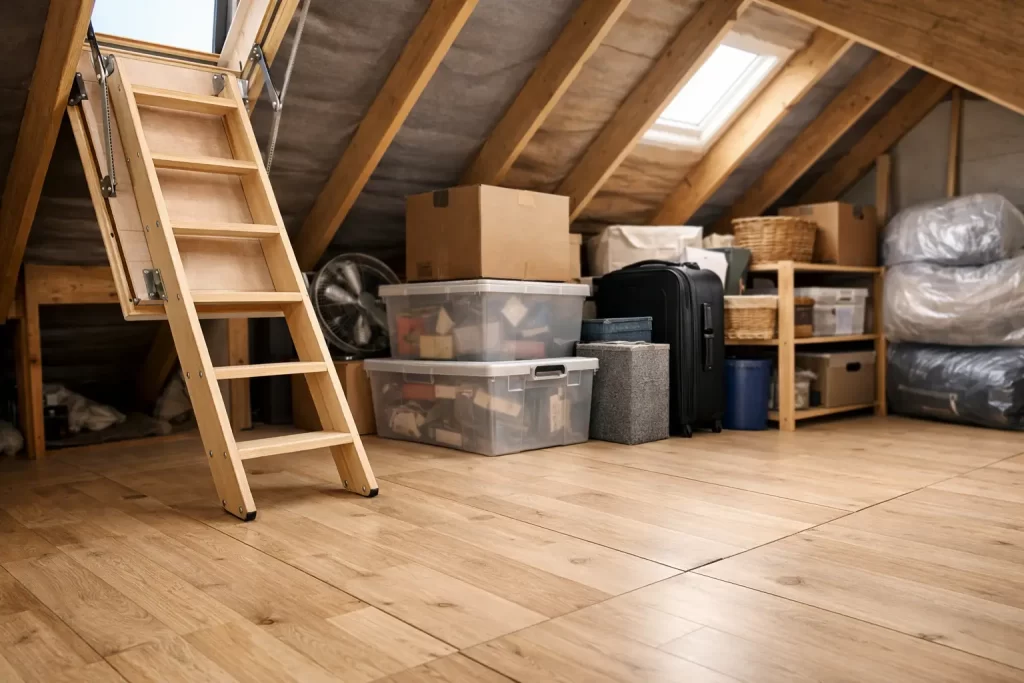
Most attic storage problems start the same way – a few boxes go up, someone balances on the joists, and suddenly the space feels a lot less useful than it looked from the hatch. Choosing the best flooring for attic storage is not just about laying down boards. It is about making the attic safe to walk on, protecting insulation, and creating storage space that actually works for everyday life.
For most homeowners, the right answer is not the cheapest sheet material from the hardware store. It is a flooring setup that matches how the attic will be used, how much weight it needs to handle, and whether insulation depth needs to be preserved. That is where many DIY jobs go wrong.
What makes the best flooring for attic storage?
The best attic flooring needs to do three jobs well. It has to create a stable surface, avoid crushing insulation, and make safe movement around the attic possible. If it misses any one of those, the space may still look improved, but it will not perform properly.
A lot depends on the attic itself. Some homes have enough joist depth and a straightforward layout. Others have low joists, uneven spacing, pipes, cables, or newer insulation that sits higher than the timber. In those cases, putting boards directly on top of the joists can reduce insulation performance and create a poor result from the start.
That is why raised attic flooring systems are often the strongest long-term option. They lift the floor above the insulation layer so you get usable storage without compressing the material that helps keep heat in the home.
Why standard chipboard is not always enough
Chipboard loft panels are common because they are affordable and widely available. They can work in the right attic, especially where insulation depth and joist height allow for direct boarding. For light, occasional storage, they may seem like the obvious choice.
The problem is that chipboard on its own is not automatically the best flooring for attic storage. If the insulation sits proud of the joists, the boards can squash it down. That reduces thermal performance and can cancel out the benefit of having proper insulation in the first place. It also means the finished floor may not feel as stable as expected if the setup underneath has not been planned properly.
Moisture resistance matters too. Standard boards can suffer over time if the attic has condensation issues or poor ventilation. A professionally chosen and fitted flooring system usually takes more of these real-world factors into account than a quick DIY install.
Raised attic flooring is often the better option
If you want attic storage that feels solid and does not interfere with insulation, raised flooring is usually the smarter route. This system uses supports fixed to the joists, then boards are installed above them to create a new level walking surface.
That extra height makes a big difference. Insulation can stay at the correct depth, airflow is less restricted, and the floor itself feels more purpose-built. For homeowners who want to store suitcases, seasonal decorations, keepsakes, or household overflow without worrying about damaging the attic, raised flooring gives a cleaner and more reliable result.
It also helps with safety. A proper raised floor creates defined walking areas instead of leaving people stepping awkwardly between timbers and stored items. That matters more than many people realize, especially in family homes where the attic gets used more than once or twice a year.
Plywood, chipboard, or raised systems?
Plywood is stronger than many people expect and can be a good flooring material in some attic setups. It tends to handle moisture better than standard chipboard, and it offers good strength for its thickness. If the attic is being upgraded for more regular access, plywood can be part of a solid flooring solution.
Chipboard remains a common budget-friendly choice, particularly in panel form. It is easy to fit and works well where conditions are suitable. But it is best seen as one part of the job, not the whole decision.
Raised systems are different because they solve the insulation issue first and then create the floor above it. That is why they are often the best overall choice for modern homes. They are not just about the board material. They are about how the entire attic floor is built to perform.
Weight capacity matters more than people think
One of the biggest mistakes with attic storage is assuming that if a floor looks finished, it can take anything you put on it. In reality, attics are usually designed for ceiling support first, not heavy storage loads.
That does not mean you cannot use the space well. It means the flooring needs to be chosen with realistic use in mind. Light household storage is very different from stacking books, tools, gym equipment, or packed archive boxes across a large area.
This is where professional assessment matters. The best flooring for attic storage is not just the one that looks neat after installation. It is the one that suits the structure already in place. A dependable specialist will look at the joists, the access point, the insulation depth, and how much usable area makes sense before recommending the right setup.
Safety is part of the flooring decision
Flooring and access should be thought about together. There is little value in having a well-boarded attic if the hatch is awkward, the ladder feels unsafe, or there is nowhere stable to step when you get up into the space.
A good attic storage setup usually works as a package. Safe ladder access, a secure hatch, proper lighting, and solid flooring all support each other. If one part is poor, the whole space becomes less practical.
This is often why homeowners choose a specialist rather than trying to piece the job together themselves. It saves time, reduces hassle, and leads to a better finish. More importantly, it gives you an attic you will actually use rather than one that remains half-finished because one detail got overlooked.
The cleanest looking job is usually the best performing one
There is a visual difference between rushed attic boarding and a properly planned installation. Clean lines, well-fitted panels, sensible layout around obstructions, and stable walking areas all point to better workmanship.
That matters because attic spaces are awkward by nature. Pipes, cables, tank supports, and limited headroom can all affect how flooring should be installed. A rough job may technically create storage, but it can leave gaps, weak spots, and difficult access that become frustrating every time you use the space.
A professional finish is not just about appearance. It usually reflects careful measuring, correct support placement, and attention to how the attic will function long term.
So, what is the best flooring for attic storage for most homes?
For most homes, raised attic flooring with properly fitted boards is the best all-around option. It protects insulation, creates safer access, and gives a stronger, more usable storage surface than simply laying boards straight across the joists.
That said, there is no one-size-fits-all answer. If your attic has suitable joists, low insulation depth, and only needs light occasional storage, standard boarding may be enough. If you want a more dependable setup that supports regular use and preserves energy efficiency, raised flooring is usually the better investment.
The key is to avoid choosing based on board price alone. The cheapest route can become the most expensive if it causes insulation problems, feels unsafe underfoot, or needs to be redone later.
When it makes sense to call a specialist
If you are unsure what is under the existing insulation, whether the joists are suitable, or how much of the attic should actually be floored, it is worth getting proper advice. This is especially true if you also need a better attic ladder, hatch upgrade, or a cleaner overall storage solution.
A specialist attic company will usually be able to assess the space quickly and recommend the most practical option without overcomplicating the job. That is what most homeowners want – a straightforward answer, clear pricing, and a finished attic that is safe, tidy, and ready to use.
At AOS Attic Ladders & Flooring, that practical approach is exactly what homeowners value. The goal is not to oversell a complicated build. It is to fit the right attic flooring solution for the home, the insulation, and the way the space will really be used.
A good attic should make life easier, not give you another home project to worry about. If the floor is done right, the storage space tends to take care of itself.