
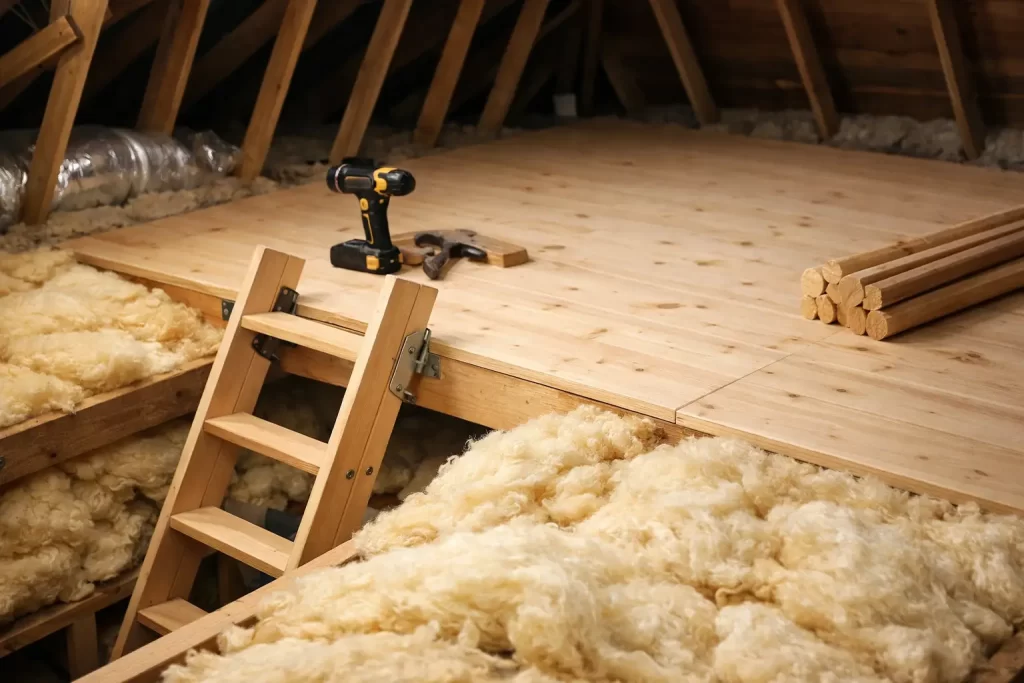
A lot of homeowners ask the same question once they start looking for more storage space: can you board an attic over insulation? The short answer is yes, but not by simply laying boards directly on top of the insulation. If you do that, you can reduce the insulation’s performance, create ventilation problems, and end up with an attic floor that is less useful than it looks.
This is where many attic projects go wrong. On the surface, it seems simple enough – put down some boards and start storing boxes. In reality, the way the flooring is installed matters just as much as the flooring itself.
Can You Board an Attic Over Insulation Without Causing Problems?
You can, but the attic flooring needs to be raised above the insulation rather than pressed down into it. Most modern attics need a decent depth of insulation to help the home hold heat and stay energy efficient. If you squash that insulation under boards, you reduce the air pockets that make it work.
That means your home can lose heat faster in winter and become less energy efficient overall. It can also lead to cold spots and, in some cases, moisture issues if airflow in the attic is affected.
So the real answer is this: yes, you can board an attic over insulation, but only with a system that keeps the insulation depth intact.
Why Laying Boards Directly on Insulation Is a Bad Idea
Insulation is not designed to carry weight. It is designed to slow heat transfer. When storage boards are laid directly on top of thick attic insulation, the material gets compressed. Once compressed, it does not perform the same way.
There is also the issue of stability. Boards laid over soft insulation are not properly supported, which can make them feel uneven or unsafe underfoot. For a homeowner using the attic now and then, that may seem manageable at first. Over time, though, it usually becomes obvious that the floor was never built for proper use.
Another concern is the structure underneath. Attic joists in many homes are not intended to be used like a standard room floor. That does not mean attic storage is impossible. It means the flooring should be planned properly, with the right supports and clear limits on how the space will be used.
The Right Way to Board an Attic Over Insulation
The best approach is raised attic flooring. This creates a gap above the joists so insulation can remain full depth underneath, while the boards sit on a stable frame above it.
This matters for two reasons. First, it protects the thermal performance of the insulation. Second, it gives you a much more solid and reliable storage platform.
A raised flooring setup is usually the best option when homeowners want to turn an underused attic into practical storage space without undoing the benefit of their insulation upgrades. It is a cleaner, safer, and more durable solution than a quick DIY fix.
In many homes, this also ties into the overall attic access setup. If the attic ladder is awkward, the hatch is poorly insulated, or there is no safe walkway, simply adding a few boards will not solve the real problem. The best results usually come from treating the attic as a complete access-and-storage project rather than a one-part job.
What to Check Before Installing Attic Flooring
Before any boarding goes down, the attic needs to be assessed properly. The first thing to look at is joist size and spacing. Some attics are suitable for light storage once the flooring is installed correctly. Others may need more careful planning.
The next thing is insulation depth. Many homeowners are surprised by how much insulation should be there. If your attic has been topped up in recent years, the insulation may already sit well above the joists. That is usually a good sign for energy performance, but it also means direct boarding is even less suitable.
Ventilation is another key point. An attic needs to breathe. If insulation is pushed into the wrong places or boards block airflow patterns, condensation can become a problem. That is the kind of issue you want to avoid from the start rather than fix later.
Electrical cables also need attention. In some attics, wiring may run across joists or through areas where flooring is planned. That does not always stop the job, but it does mean the work should be carried out carefully and professionally.
Raised Flooring vs. Basic Loft Boards
Homeowners often compare a raised flooring system with standard loft boards from a hardware store. The difference is not just cost. It is about whether the finished attic will actually do the job properly.
Basic boards may look like the cheaper option, but if they are installed in a way that crushes insulation or creates an unstable surface, they are a false economy. You may gain storage space in the short term while losing insulation performance and creating a floor that is awkward to use.
Raised flooring costs more because it is doing more. It protects insulation depth, creates support where it is needed, and gives you a proper platform for light attic storage. For most homeowners, that is the option that makes sense if they want the work done once and done right.
Is It Safe to Use an Attic for Storage?
Usually, yes – for light, sensible storage, provided the attic is fitted out correctly. Holiday decorations, suitcases, archived paperwork, and similar household items are common examples. Heavy furniture, gym equipment, or anything that puts major weight on the structure is another story.
This is where realistic expectations matter. An attic storage area is not the same thing as a converted living space. If your goal is simply to make the attic accessible, tidy, and useful, a properly raised boarded area can work very well.
If your goal is to create a full room, that moves into a different category of work entirely. Most homeowners asking about attic boarding are not looking for that. They just want safe access and clean, usable storage.
When Professional Installation Makes More Sense
There are DIY attic products on the market, and for some people that will always be appealing. But attic flooring is one of those jobs where the hidden details matter. The hatch, the ladder, the insulation depth, the raised supports, the walkway, and the finished boarding all need to work together.
A professional installer can assess whether the attic is suitable, recommend the right setup, and complete the job in a way that avoids the usual mistakes. That means less guesswork and a better finished result.
For busy homeowners, that matters. Most people do not want to spend weekends crawling through insulation, cutting boards in tight spaces, and hoping they have not blocked ventilation or compressed the insulation too much. They want a practical result, fitted cleanly, with minimal disruption.
That is why specialist attic flooring companies tend to focus on complete package installations rather than one-off bits and pieces. It keeps the job straightforward and gives the homeowner a usable attic rather than half a solution.
Common Mistakes Homeowners Make
The biggest mistake is assuming the attic floor should be boarded the same way as a shed or garage loft. Attics are different because insulation depth and ventilation are such a big part of the job.
Another common mistake is boarding too much of the space without thinking about access and safety. A small, properly fitted storage area with safe footing is usually better than trying to cover every inch of the attic badly.
People also underestimate the importance of the attic hatch and ladder. If access is poor, the attic will not get used properly no matter how good the flooring looks. A stable ladder and a well-fitted insulated hatch often make just as much difference as the flooring itself.
So, Can You Board an Attic Over Insulation?
Yes – as long as the flooring is raised and installed in a way that does not crush the insulation. That is the key point. Boarding an attic is not just about creating a flat surface. It is about keeping the attic energy efficient, safe to use, and genuinely practical for storage.
If you are thinking about using your attic for extra storage, it is worth getting the setup right from the start. A properly planned attic floor will serve you far better than a quick fix, and you will notice the difference every time you pull the ladder down and use the space with confidence.
A good attic should not just give you more room. It should make the room you already have work better.