
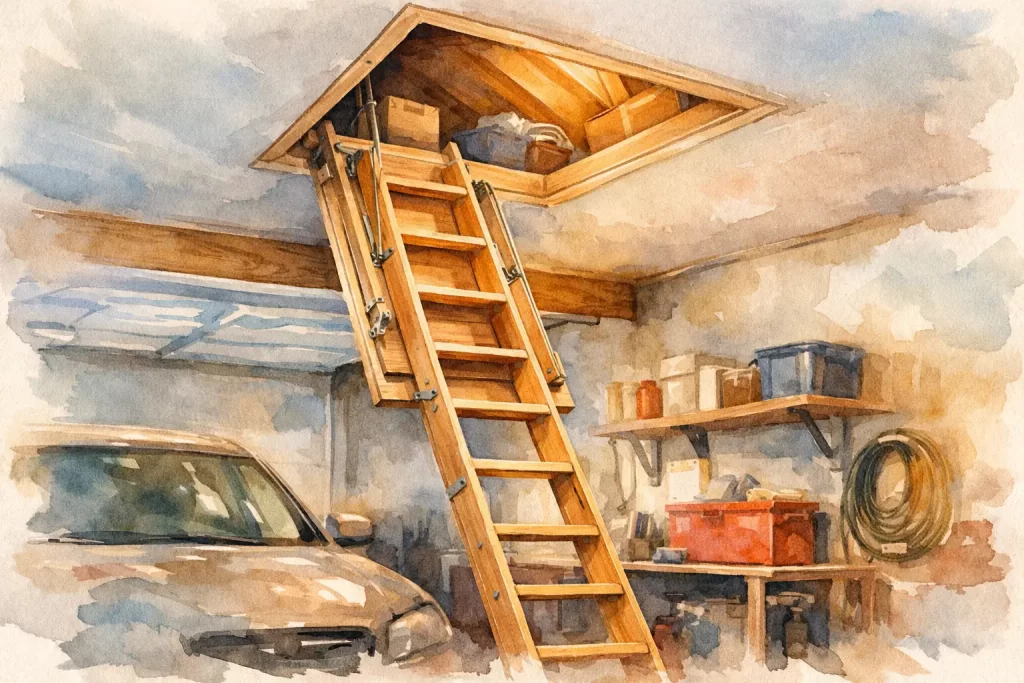
A garage attic can hold far more than boxes you cannot reach. Seasonal decorations, sports gear, luggage, and household items all need a dry, accessible place to go. A properly planned garage attic ladder installation turns that unused overhead space into practical storage without relying on a loose step ladder or an unsafe climb through a ceiling opening.
The best result is not simply a ladder that opens and closes. It is a safe access point that suits the available ceiling space, protects the garage from drafts, and gives you confidence every time you climb up or down. For most homeowners, professional fitting is the straightforward way to get it right without the mess, guesswork, or risk of cutting into the wrong part of the ceiling.
Why garage attic access needs a proper plan
Garages often seem like the obvious place for attic storage because they are separate from the main living areas and already hold tools, equipment, and bulky items. But the attic above a garage can be very different from the attic above the rest of the house. Ceiling joists, wiring, lighting, garage door tracks, and roof framing can all affect where a ladder can go.
The first job is choosing an opening that provides enough clearance for the ladder and a safe landing area below. A ladder should not interfere with the garage door, a parked car, shelving, or a workbench. It also needs enough room above the opening to operate correctly once unfolded.
There is a second consideration: not every garage attic is suitable for heavy storage. The floor structure may only be designed to support the ceiling beneath it, not rows of heavy boxes. A good installer will assess the access point and discuss the kind of storage you have in mind before recommending attic flooring or a ladder package.
What a professional garage attic ladder installation includes
A professional installation starts with measuring the available space, checking the ceiling construction, and selecting a ladder size that fits the opening. The existing opening may be suitable, but many homes need a new or enlarged opening for safe, comfortable access.
The installer then cuts and frames the opening as required, fits the ladder unit, and secures it so it operates smoothly. The finished work should look neat from below, with a properly fitted hatch door that closes securely. A clean installation also means protecting the garage during the work and removing the installation debris afterward.
The ladder itself matters. Folding timber ladders are popular for regular storage access because they feel solid underfoot and fold neatly into the attic. Other options may suit tighter spaces or lower ceilings. The right choice depends on ceiling height, hatch size, headroom, and how often the attic will be used.
An insulated hatch is worth considering, particularly where the garage is attached to the home. It helps reduce heat loss through the opening and creates a more complete finish than a basic uninsulated panel. Airtight sealing around the hatch can further limit drafts and dust movement between the garage and attic.
Safety features that make everyday use easier
An attic ladder should make storage easier, not create another household hazard. The safest setup is one that gives you stable footing from the first step to the last.
A handrail is a simple upgrade that makes a real difference, especially when carrying lighter items or when children and older family members may use the ladder. Wide, secure treads and a ladder angle designed for the available ceiling height also improve comfort and control.
The attic area needs attention too. If you plan to walk around once you are up there, raised attic flooring provides a stable route above insulation and helps prevent damage to wiring, pipework, or the ceiling below. It is often best to create a sensible storage platform and walkway rather than covering every inch of the attic.
Keep the load realistic. Luggage, holiday decorations, and lighter household items are generally suitable for attic storage when the floor has been prepared for it. Heavy furniture, large quantities of books, gym equipment, or paint cans can add up quickly. If you are unsure, ask before loading the space.
The garage-specific details homeowners often miss
Garage attic ladder installation is not a one-size-fits-all job. The location of a garage door mechanism is one of the biggest practical issues. Tracks, openers, and rails can occupy the exact space a folding ladder needs. Moving the opening a short distance can solve the problem, but that decision should be made before any cutting begins.
Electrical cables and light fittings are another common concern. A professional assessment helps identify obstacles early, so the new hatch does not leave you with a blocked light, exposed wiring, or an awkward ladder position.
Fire separation can also matter, particularly in an attached garage. The ceiling may form part of the barrier between the garage and the home, so the hatch should be selected and fitted with the property’s layout in mind. This is one reason a basic DIY hatch conversion is not always the bargain it first appears to be.
Finally, think about the items stored directly below the opening. A ladder needs a clear area to fold down. If the only possible location is above a crowded storage rack or beside the car door, it may become an access point nobody wants to use.
DIY installation or professional fitting?
A handy homeowner can install some attic ladders, but the trade-off is time, tools, and responsibility for the finished structure. The job can involve measuring and cutting a ceiling opening, framing around it, dealing with insulation, fitting a heavy ladder unit, and ensuring the hatch closes correctly. Small measurement errors can lead to gaps, poor operation, or a ladder that does not sit securely.
Professional fitting is usually the better choice when a new opening is needed, the ceiling framing is unclear, insulation needs to be preserved, or the garage has door tracks and electrical services nearby. It is also the practical option for busy households that want the work completed efficiently and left tidy.
At AOS Attic Ladders & Flooring, the focus is on specialist attic access and storage upgrades rather than general carpentry work. That experience helps make the process quicker for homeowners who want a clear recommendation, a clean installation, and a finished setup they can use straight away.
Preparing for installation day
There is not much you need to do, but a little preparation helps the installation go smoothly. Clear the floor area where the ladder will open and move vehicles out of the garage if possible. This gives the installer space to work safely and helps keep your belongings clean.
If you have noticed wiring, pipework, water tanks, or awkward roof supports in the attic, mention them when requesting a quote. Photos of the garage ceiling and attic area can also help an installer understand the layout before arriving.
It is useful to decide how you plan to use the space. A simple ladder may be enough for occasional access, while frequent storage use may justify insulation, a handrail, and raised flooring at the same time. Completing the work as one coordinated project avoids reopening the ceiling later for upgrades that could have been planned from the start.
Questions to ask before choosing a ladder
Will the ladder fit my garage ceiling height?
Ladders are made for specific height ranges. Measuring from the garage floor to the ceiling is essential, but the available attic headroom and folding clearance also need to be checked. A specialist can recommend a model that opens safely in the space you actually have.
Can I store items in the attic right away?
That depends on the attic floor structure and whether a suitable storage platform has been installed. Do not assume exposed ceiling joists are ready for heavy loads. Discuss what you want to store before the work begins.
How long does installation take?
Many straightforward installations can be completed efficiently, but timing depends on whether a new opening is required and whether flooring, insulation, or other upgrades are included. A clear assessment should set expectations before the work is booked.
A well-fitted attic ladder earns its place every time you put something away without dragging a step ladder across the garage. Choose an access solution that fits the space, supports safe use, and makes the storage you already have overhead genuinely useful.