
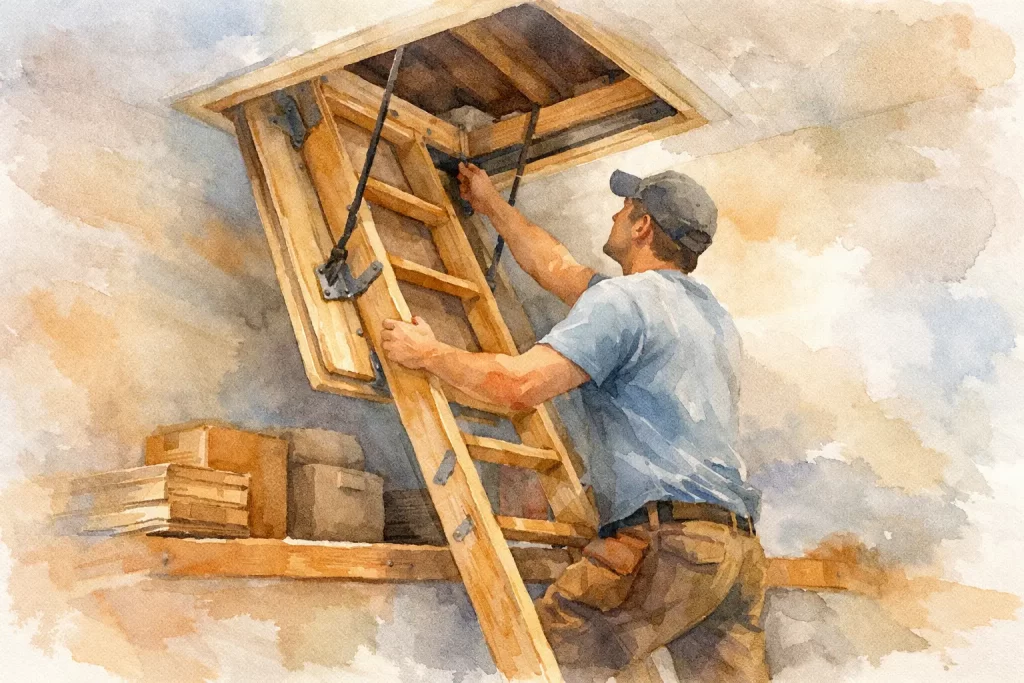
Searching for “install attic ladder one person” usually means you want a quicker, cheaper route to better storage. That is understandable. An attic ladder can turn an awkward ceiling hatch into practical access in a day. But the ladder itself is only one part of the job. The real question is whether one person can lift, position, secure, trim, and test it without creating a safety issue or damaging the ceiling.
For most homeowners, the honest answer is this: one person may be able to prepare parts of the job, but installing a full attic ladder alone is rarely the safest or most sensible approach. A folding ladder unit is bulky, overhead work is unforgiving, and correct fitting depends on a secure opening and careful measurements.
Can One Person Install an Attic Ladder?
It depends on the type of ladder and the condition of the existing opening. Replacing a lightweight ladder in an already suitable opening is very different from creating a new opening in a plasterboard ceiling.
A standard folding attic ladder is generally supplied as a complete frame-and-ladder unit. That unit has to be raised into the ceiling opening, held level, fixed to the surrounding structure, and checked for smooth operation. Even if it is not extremely heavy, it is difficult to control when you are standing below it with your arms overhead.
A second person makes a major difference. One person can support the unit from below while the other checks that the frame is square, properly seated, and securely fixed. This is not just about making the job faster. A frame that is slightly twisted or poorly supported can cause sticking, gaps around the hatch, loose trim, or a ladder that does not feel stable underfoot.
There are situations where an experienced tradesperson may handle parts of an installation independently using temporary supports and the right equipment. That does not make it a good DIY job for a homeowner working alone. Experience, lifting technique, and knowing how the ceiling structure behaves all matter.
The Work Hidden Behind a New Ladder
The visible result is simple: a neat hatch, a folding ladder, and easier access to the attic. Behind that finish, there are several decisions that affect safety and performance.
First, the opening must be the correct size for the selected ladder. A ladder frame should never be forced into a space that is too small, and gaps should not be disguised with excessive filler or trim. The surrounding joists and framing also need to be assessed. Cutting or altering structural timber without understanding its role can create a much bigger problem than an inconvenient attic hatch.
Second, the ladder needs to suit the ceiling height and the available floor space below. If the ladder lands too close to a wall, doorway, or furniture, it can be awkward to use safely. The feet should sit flat on the floor, and the ladder should open and close without rubbing against the frame.
Third, attic access is also part of your home’s insulation line. A basic uninsulated hatch can allow warm air to escape into the attic. A properly fitted insulated door, good seals, and airtight finishing help reduce drafts while giving you practical access to storage.
Finally, there is the attic itself. A ladder provides access, but it does not automatically create safe storage. If you plan to carry boxes into the attic, you need a stable walking surface and flooring that does not crush insulation or overload unsuitable areas.
Why the Lift Is the Risky Part
The biggest challenge for someone attempting to install an attic ladder alone is getting the assembly into position. The work is above shoulder height, often on a step ladder, with limited room to move. If the frame slips, it can damage the ceiling edge or injure the person underneath.
Trying to improvise with ropes, props, or stacked furniture is not a sensible substitute for a helper. Temporary supports can shift, especially while you are trying to drill, screw, or adjust the frame. A falling unit may not be massively heavy, but it is more than heavy enough to cause injury.
The risk does not end once the unit is in place. Incorrect fasteners, poor alignment, or a frame that is not fully supported can leave you with a ladder that appears fine at first but loosens over time. Attic ladders carry people and often boxes. They should feel solid every time they are used, not just on the day they are fitted.
When a DIY Installation May Be Reasonable
A capable homeowner with carpentry experience may be comfortable replacing an existing ladder where the opening, framing, and ceiling height are already correct. In that case, having a second adult available for lifting and positioning is still strongly recommended.
DIY becomes less suitable when the job involves cutting a new opening, changing joists, working around electrical wiring, repairing damaged plasterboard, or adding insulated and airtight finishing. These are the points where a small access upgrade can turn into a more involved carpentry project.
You should also think about the value of your time. A ladder installed by a specialist is not only about fitting the product. It includes measuring the opening, choosing a suitable model, protecting the work area, completing neat trim, and testing the finished ladder. For busy homeowners, that is often better value than spending a weekend trying to solve problems from a ladder under the ceiling.
What a Professional Attic Ladder Installation Should Include
A good installation starts with an assessment, not a guess. The installer should check the ceiling height, attic layout, access route, available opening, and the condition of the framing before recommending a ladder.
The finished job should be secure, neat, and easy to use. The frame should sit squarely, the hatch should close properly, and the ladder should open smoothly to the correct floor position. If insulation and energy efficiency matter, ask about an insulated attic door and airtight sealing around the frame.
Cleanliness matters as well. Cutting ceilings and handling insulation can create dust, but the work area should be protected and left tidy. A professional team should remove waste from the installation area and make sure you are comfortable operating the ladder before they leave.
For homeowners who want usable attic storage, combining ladder installation with raised attic flooring is often the practical choice. The ladder gives you access; raised flooring creates a safer place for boxes while allowing insulation to remain effective underneath.
A Safer Route to Better Attic Storage
If your goal is simply to get into the attic more easily, it can be tempting to treat the ladder as a simple off-the-shelf purchase. But access needs to be safe, stable, well-insulated, and suited to the way your household will use it.
AOS Attic Ladders & Flooring helps homeowners avoid the uncertainty of measuring, lifting, fitting, and finishing the job alone. A specialist installation gives you a ladder that is properly matched to the opening, a cleaner result, and the confidence to use your attic storage without worrying about the access point beneath you.
The best attic ladder is not the one you manage to get into the ceiling by yourself. It is the one that opens easily, feels secure every time, and makes your attic space genuinely useful for years to come.