
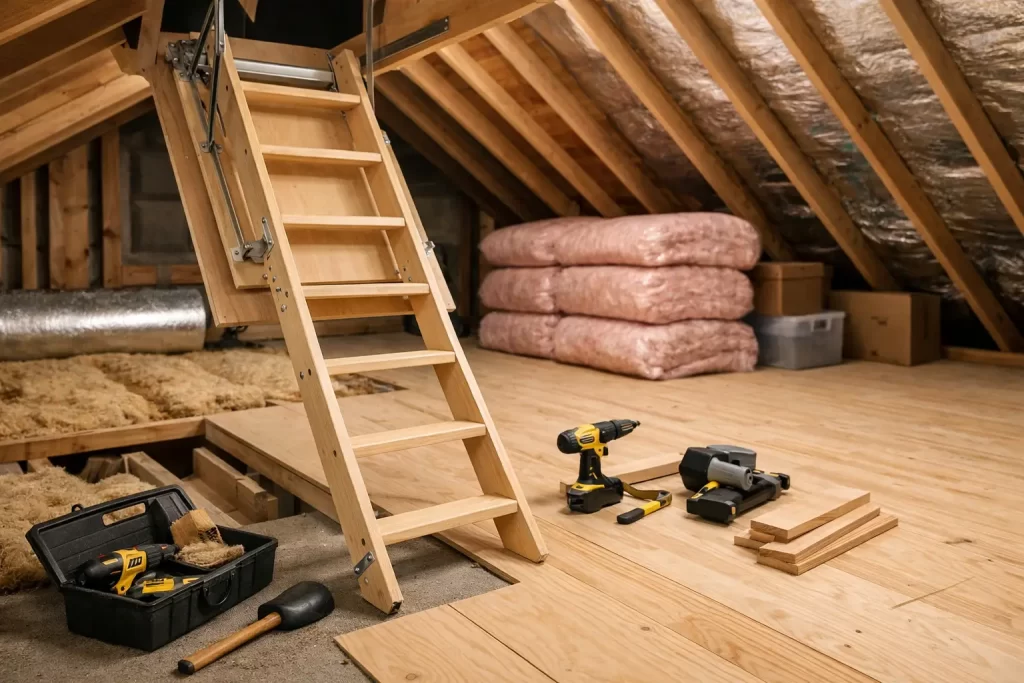
If you have to balance on ceiling joists just to stash away holiday boxes, the attic flooring installation cost usually starts feeling a lot more reasonable. For most homeowners, this job is not really about timber and screws. It is about getting safe, usable storage without turning the house upside down or taking risks with the ceiling below.
That said, price is still the first question. And fair enough. Nobody wants a vague estimate, a confusing list of extras, or a project that sounds simple until the final bill lands. The real cost of attic flooring depends on the size of the area, the way the attic is built, and whether the job includes access upgrades like a ladder, hatch improvements, or raised flooring to protect insulation.
What affects attic flooring installation cost?
The biggest factor is the type of flooring system being installed. A basic boarded area over accessible joists will usually cost less than a raised attic flooring system designed to preserve insulation depth and create a more stable storage platform. If your attic has shallow joists, uneven spacing, limited headroom, or existing insulation that should not be compressed, the job needs a more careful approach.
Size matters too, but not always in the way people expect. A very small attic section can still involve setup time, cutting around awkward areas, and making safe access work. A larger space may offer better value per square foot, but only if access is straightforward and the structure allows it.
Then there is the condition of the attic itself. If installers are walking into a clean, accessible loft with a suitable opening, clear joists, and enough room to work, the labor is simpler. If the space is cramped, poorly lit, full of old belongings, or blocked by tanks, cables, and pipework, installation takes longer.
Materials also affect cost. Stronger boards, raised support systems, insulated attic doors, handrails, and better-finished ladder setups all add to the price. For many homeowners, that is money well spent because the result is safer and easier to use. But it does mean one quote can look quite different from another even when both are described as attic flooring.
Typical attic flooring installation cost ranges
For a straightforward storage flooring job, many homeowners can expect a starting price in the low hundreds for a small section, rising into the mid or upper hundreds for a larger, better-equipped installation. Once you add raised flooring, a quality attic ladder, upgraded hatch, or insulation-related extras, the overall project often moves into the low thousands.
That is why broad online averages can be misleading. One company may be pricing only the boards. Another may be pricing a fitted package with access, finishing, cleanup, and proper installation. Those are not the same thing.
A cheaper quote can be attractive at first glance, but it is worth checking what is actually included. If the price does not cover a safe raised system where one is needed, or if access remains awkward after the floor is fitted, the job may not solve the main problem. Homeowners usually want the attic to be easy to reach, safe to step into, and practical to use week after week.
Why raised flooring often costs more – and why that can be the right call
A lot of attic storage problems come down to insulation. Modern homes need enough insulation at ceiling level, and compressing it under boards can reduce its effectiveness. That is where raised flooring systems come in. They create a platform above the insulation rather than flattening it.
This approach typically costs more than laying boards directly onto joists, but it is often the better long-term option. You keep the storage benefit without sacrificing energy performance. It also creates a more even and dependable surface for storing normal household items.
Not every attic needs the same setup. In some homes, there may already be enough depth or a suitable structure for a simpler installation. In others, raised flooring is the sensible route if you want to avoid doing the job twice. This is one of those areas where the cheapest option is not always the best value.
Access upgrades can change the total cost quickly
Homeowners often ask about flooring first and realize only afterward that access is the real issue. If the attic hatch is awkward, the ladder is missing, or the opening is poorly insulated, the flooring job alone will not fully fix the space.
Adding an attic ladder increases the total price, but it usually makes the finished storage area far more useful. The same goes for an insulated attic door, airtight sealing, or a handrail near the opening. These are practical upgrades, not cosmetic extras. They improve safety, convenience, and energy efficiency.
This is why package pricing tends to appeal to busy homeowners. Instead of hiring one person for the ladder, another for flooring, and someone else to tidy up the hatch, the job is handled as a complete upgrade. It is faster, cleaner, and easier to price properly from the start.
Labor, cleanup, and experience are part of the value
With attic work, workmanship matters. This is not a room where rough finishing is hidden by furniture. Poorly supported boards, shaky access, or careless cutting around the hatch can create ongoing frustration and, in some cases, safety issues.
Professional installation costs more than a cash job from a general handyman, but there is a reason many homeowners prefer a specialist. A team that does attic ladders and flooring every day is more likely to spot problems early, work efficiently, and leave a cleaner result. That includes protecting the area below, minimizing dust, and finishing the job in a way that feels solid underfoot.
If you are comparing quotes, ask yourself whether you are paying only for materials or for a complete, fitted service. Fast turnaround, reliable scheduling, clear communication, and a clean finish all have value, especially when you are trying to improve your home without weeks of hassle.
How to compare attic flooring installation cost quotes properly
A good quote should be easy to understand. You should know how much flooring is being installed, whether it is raised, what materials are included, and whether the attic opening, ladder, insulation protection, and finishing details are part of the price.
Watch for vague wording. Terms like board out attic can sound straightforward but may mean very different things from one installer to another. One quote may include only basic chipboard over joists. Another may include a raised support system, proper load-spreading, and a cleaner, more usable finished area.
It also helps to ask what the attic flooring is meant for. Most domestic attic floors are designed for storage, not as habitable rooms. A reputable installer should be clear about that. Promising too much is a red flag. Safe, practical storage is the goal for most homes, and honest advice is usually a good sign.
When a low price is not a bargain
If a quote looks unusually cheap, there is usually a reason. It might leave out access improvements, use lower-grade materials, skip insulation protection, or avoid any real discussion of load limits. Sometimes the installer is simply pricing for speed rather than quality.
That does not mean the highest quote is always the right one either. You are looking for a fair price for a job that solves the problem properly. The best value usually sits somewhere between bare-minimum pricing and expensive overkill.
For homeowners who want the attic done once and done right, clarity matters more than headline price. You want to know what is being fitted, how long it will take, how the house will be protected during the work, and what the finished result will actually let you do.
Is attic flooring worth the cost?
For most households, yes – if the attic is currently wasted space and the installation is done properly. A good attic floor can free up closets, reduce clutter in bedrooms, and make seasonal storage much easier. It also makes the attic safer to use, especially when paired with proper access.
The value is not only financial. It is practical. Families often do this job because they are short on space and do not want the disruption or expense of a larger renovation. Attic flooring offers a relatively fast improvement with everyday benefits.
That is especially true when the service is clear and specialized. A company like AOS Attic Ladders & Flooring focuses on exactly this type of work, which is often what busy homeowners want – straightforward advice, efficient installation, and a clean finished job without having to coordinate multiple trades.
If you are pricing the job, the best next step is to think beyond square footage alone. Consider how you want the attic to function, what access issues need solving, and whether the quote gives you a proper storage solution rather than just a few boards overhead. The right attic floor should feel like one less problem in the house, not one more thing to revisit later.